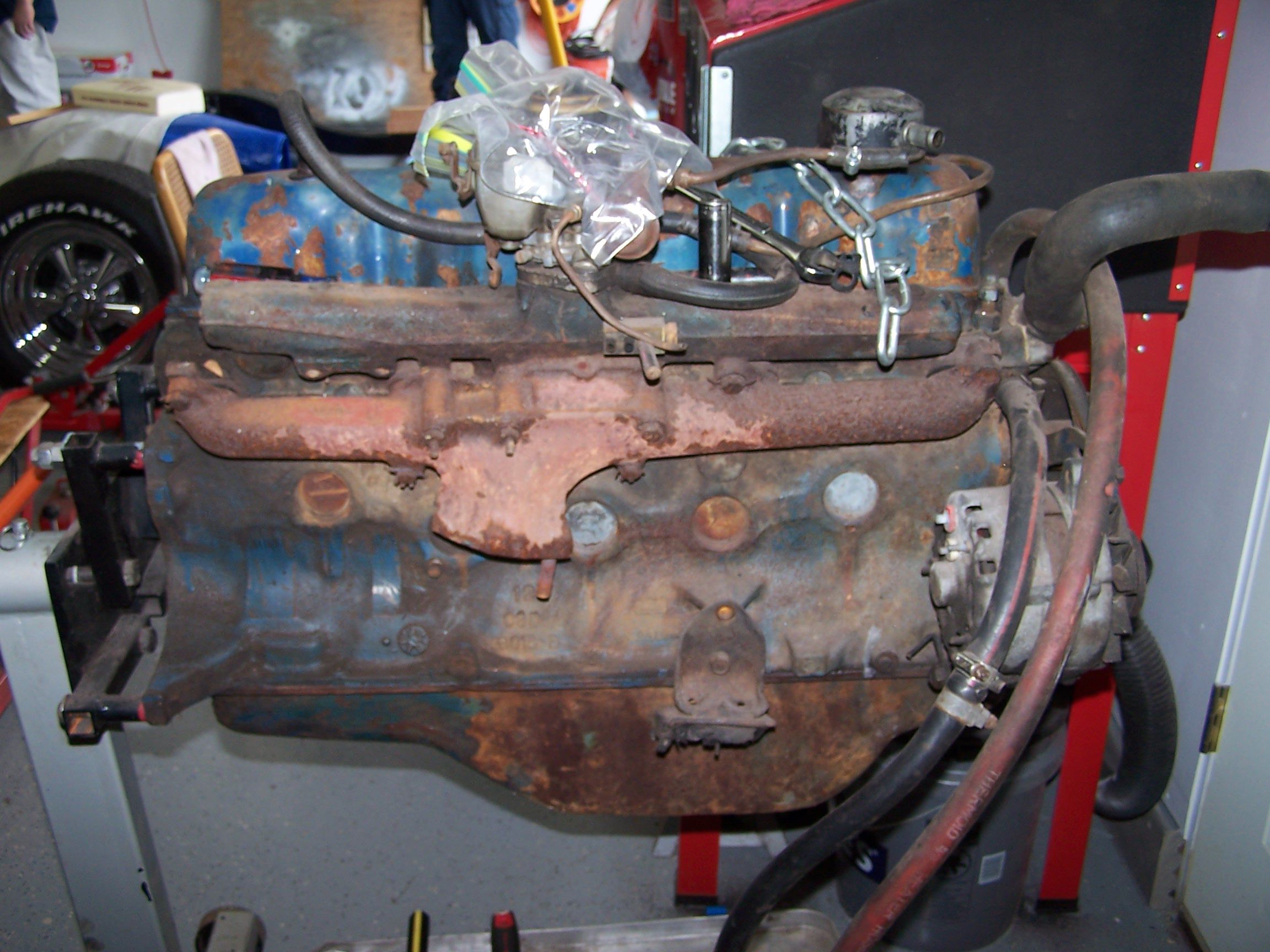
While we helped a friend rebuild the engine in his '78 Olds, we started tearing down the replacement 200ci straight 6 for the Ranchero. The original engine is still in the car. While we thought it was a 144ci, turns out that it was another 200ci. A 144ci has 3 freeze plugs. A 200ci has 5 freeze plugs.
|
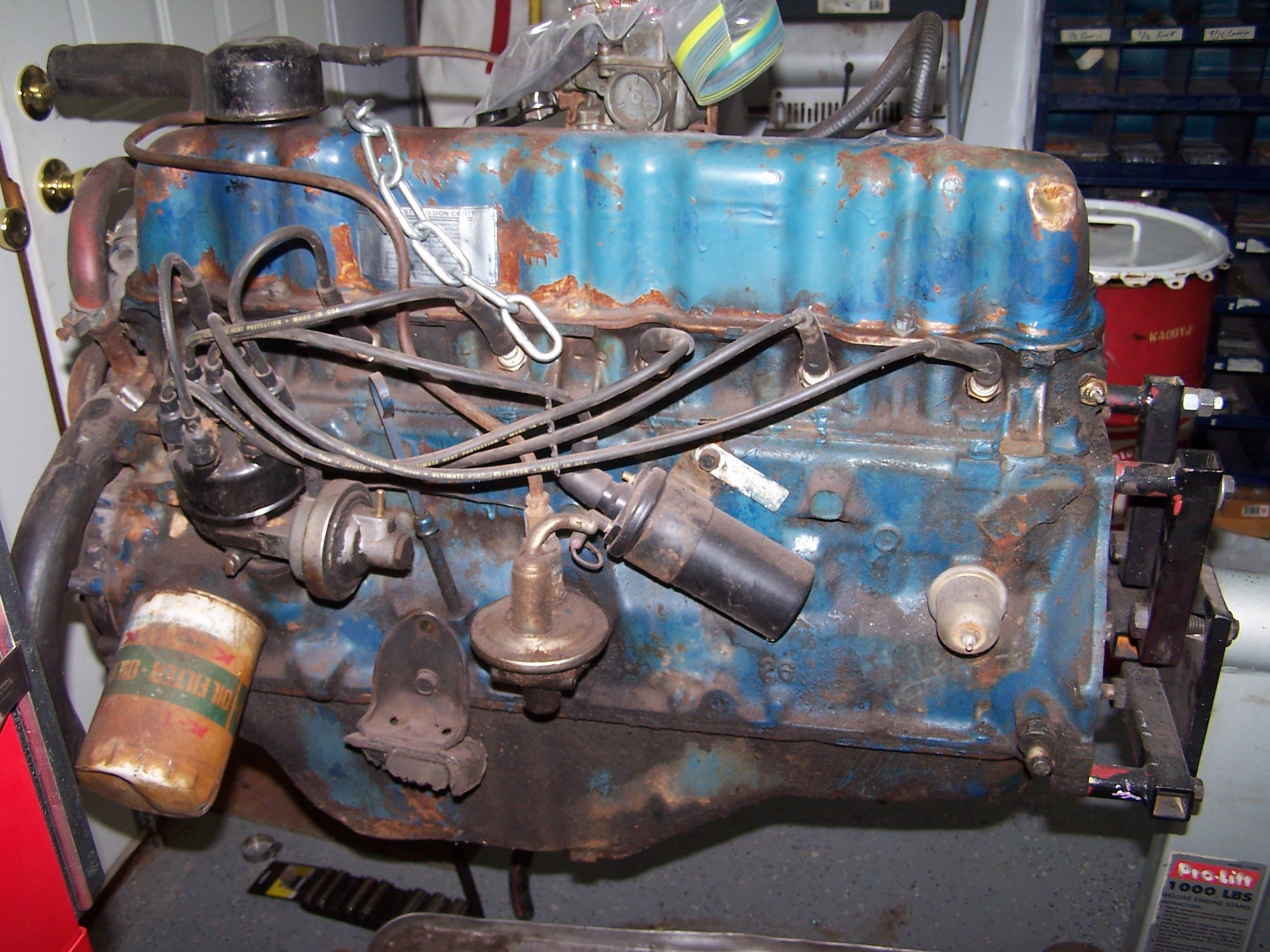
The driver side. Note the distributor is in the front since this is a Ford engine.
|
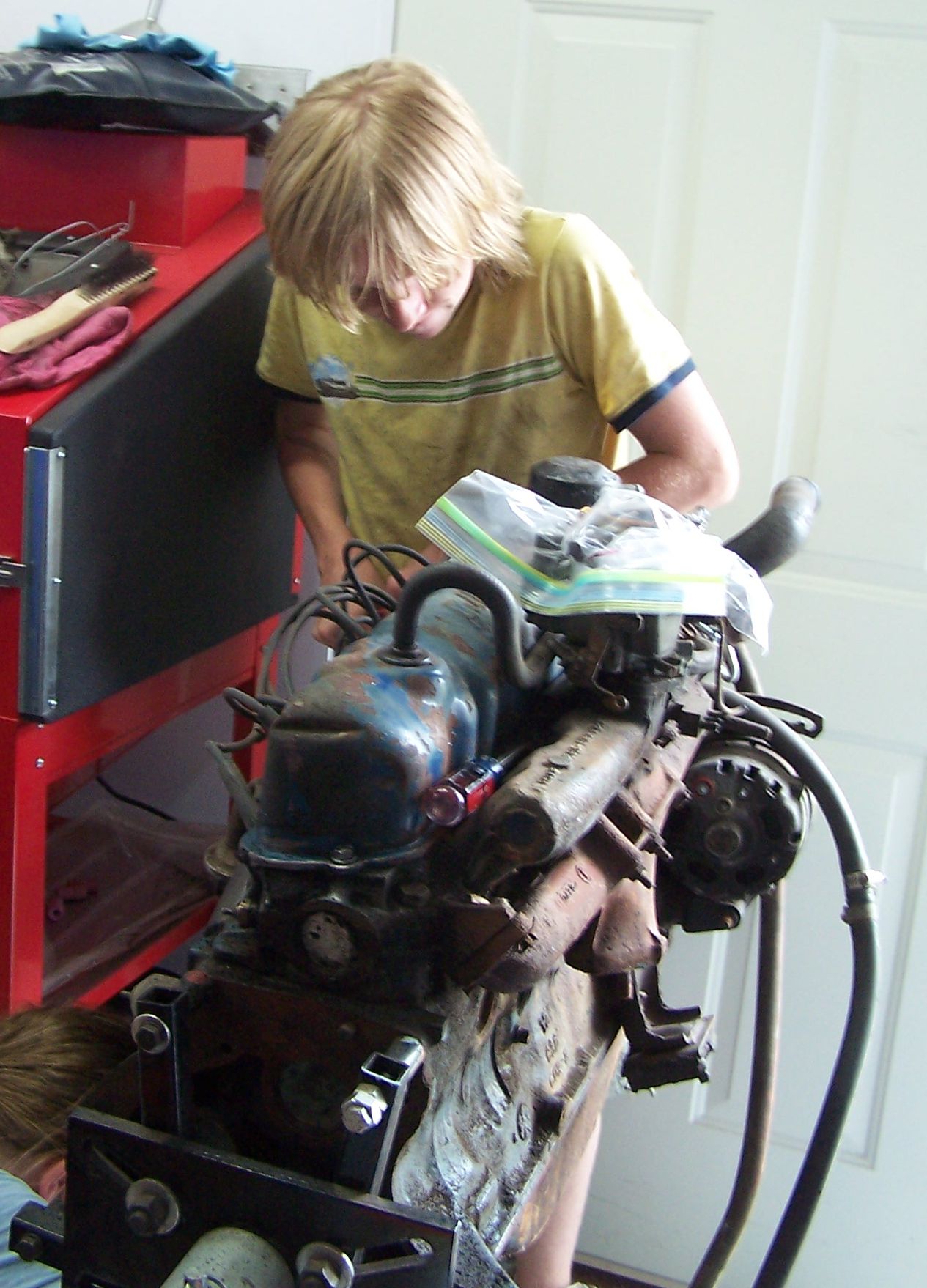
Surprisingly, he was able to break many of the bolts loose.
|
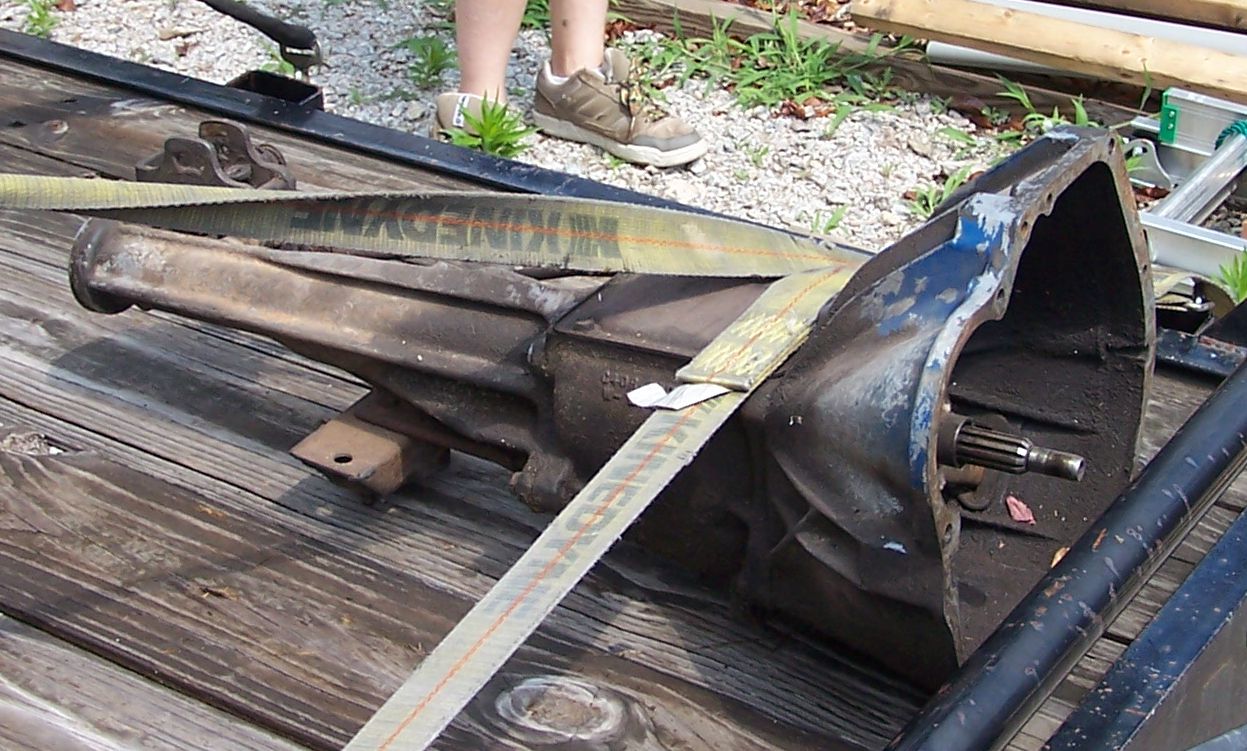
The three speed transmission from the donor engine is strapped to the trailer and headed to a car wash for a bath to remove most of the caked on dirt and oil. The shifter box indicates a floor shift, not a column shift.
|
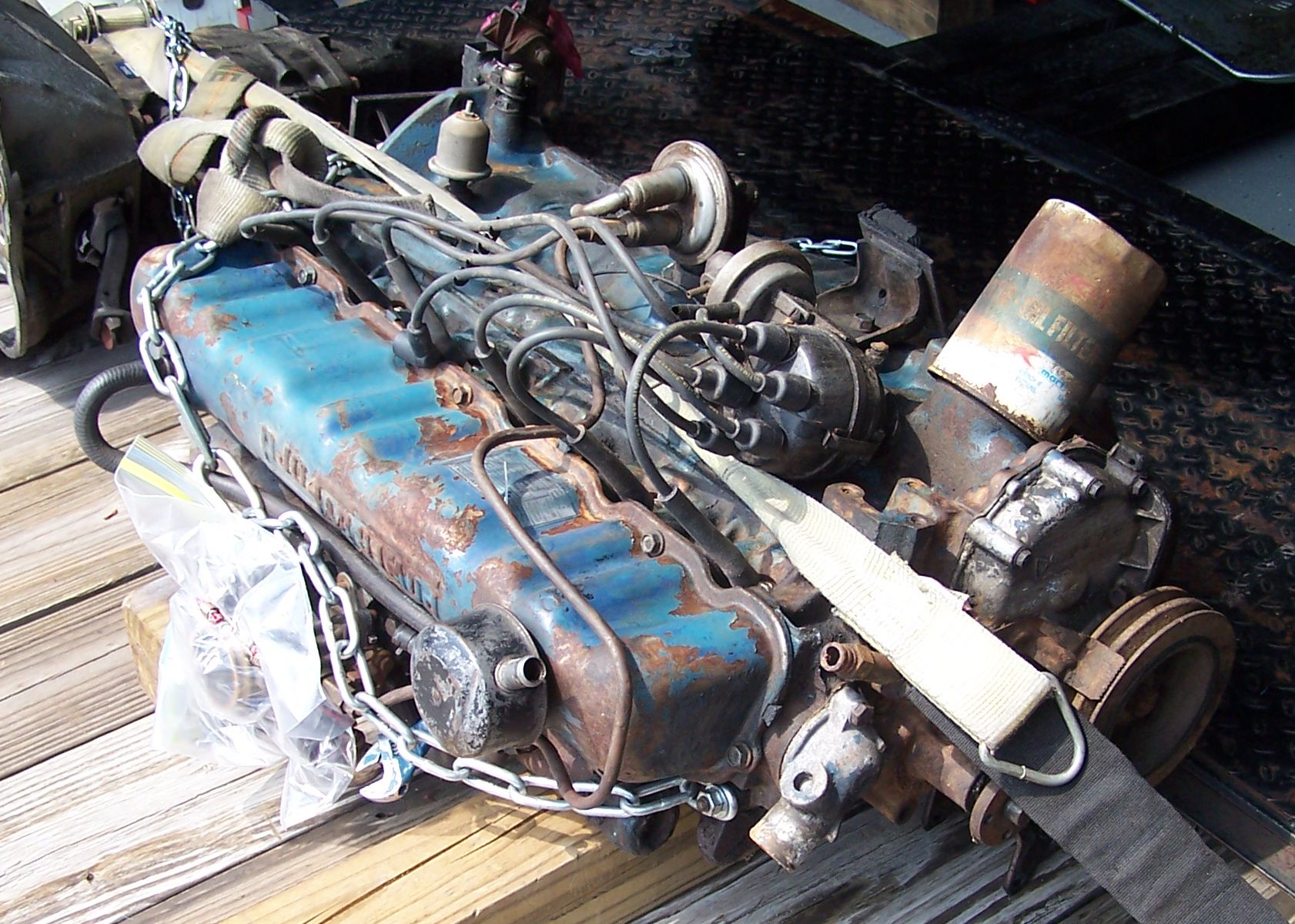
The 200ci engine was taken to the car was as well.
|
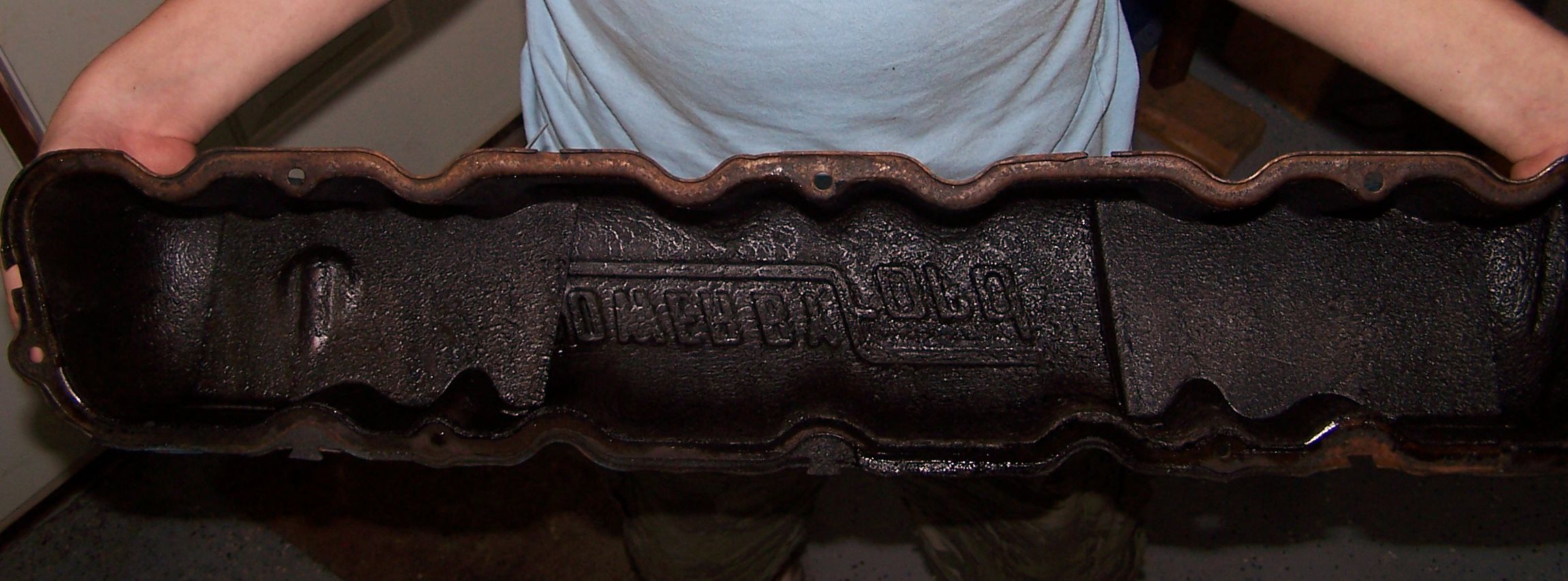
This engine has seen some use and probably some abuse through the years. The sludge isn't caked on too bad though.
|
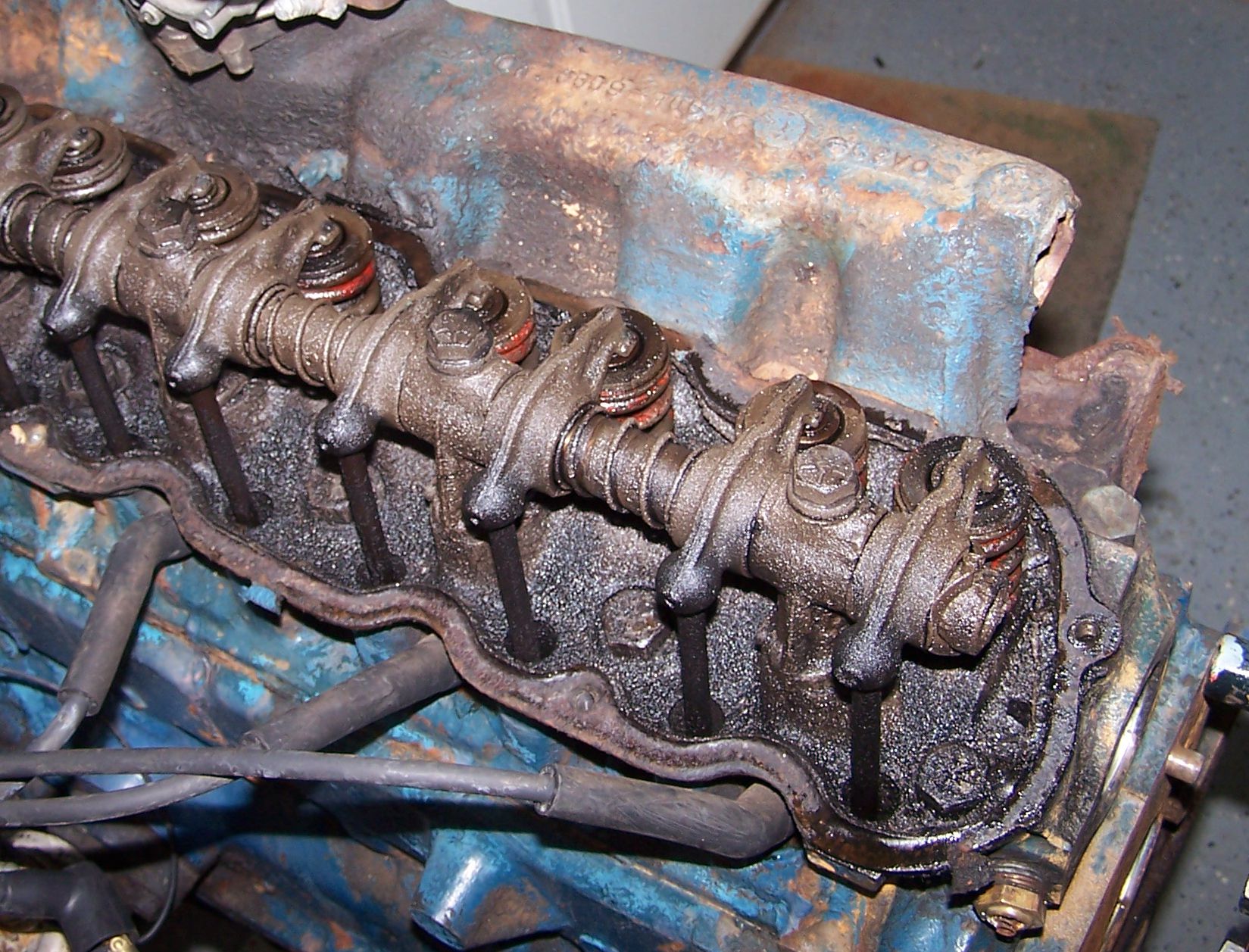
The valve train assembly looks ok and not too caked on. This is a '68 engine as it does not have adjusters for the valve lash.
|
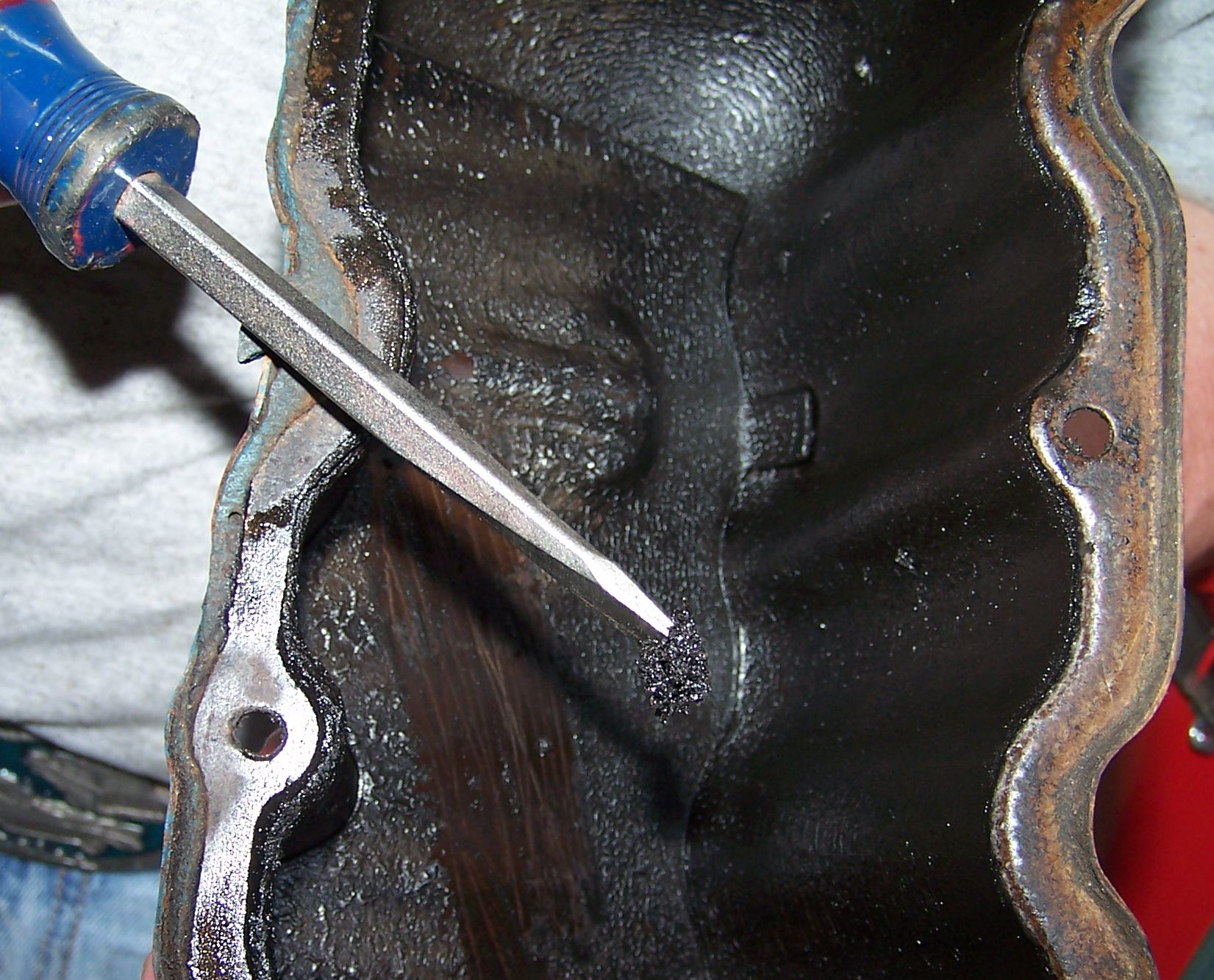
Yes, that is the sludge that builds up in an engine. Regular oil changes and high quality oils help reduce this, but it is inevitable.
|
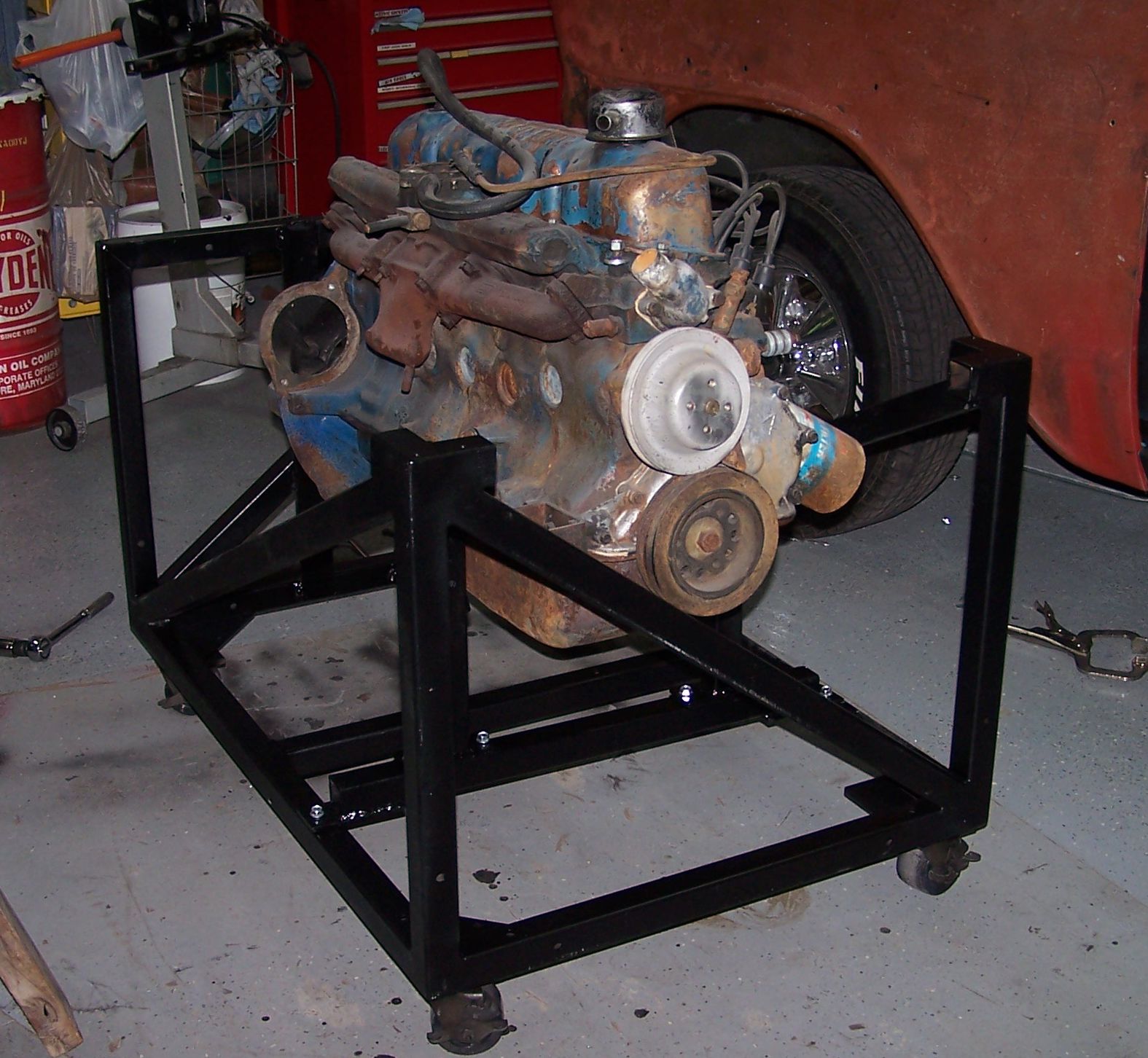 Once the top of the engine was cleaned up, Dad built an engine stand to hold it. We didn't go any further on this engine at this point. Once the top of the engine was cleaned up, Dad built an engine stand to hold it. We didn't go any further on this engine at this point.
|

Through the winter, Dad finished the engine stand, turning it into a test stand where he could run an engine, complete with radiator, starter switch, and ignition circuit.
|
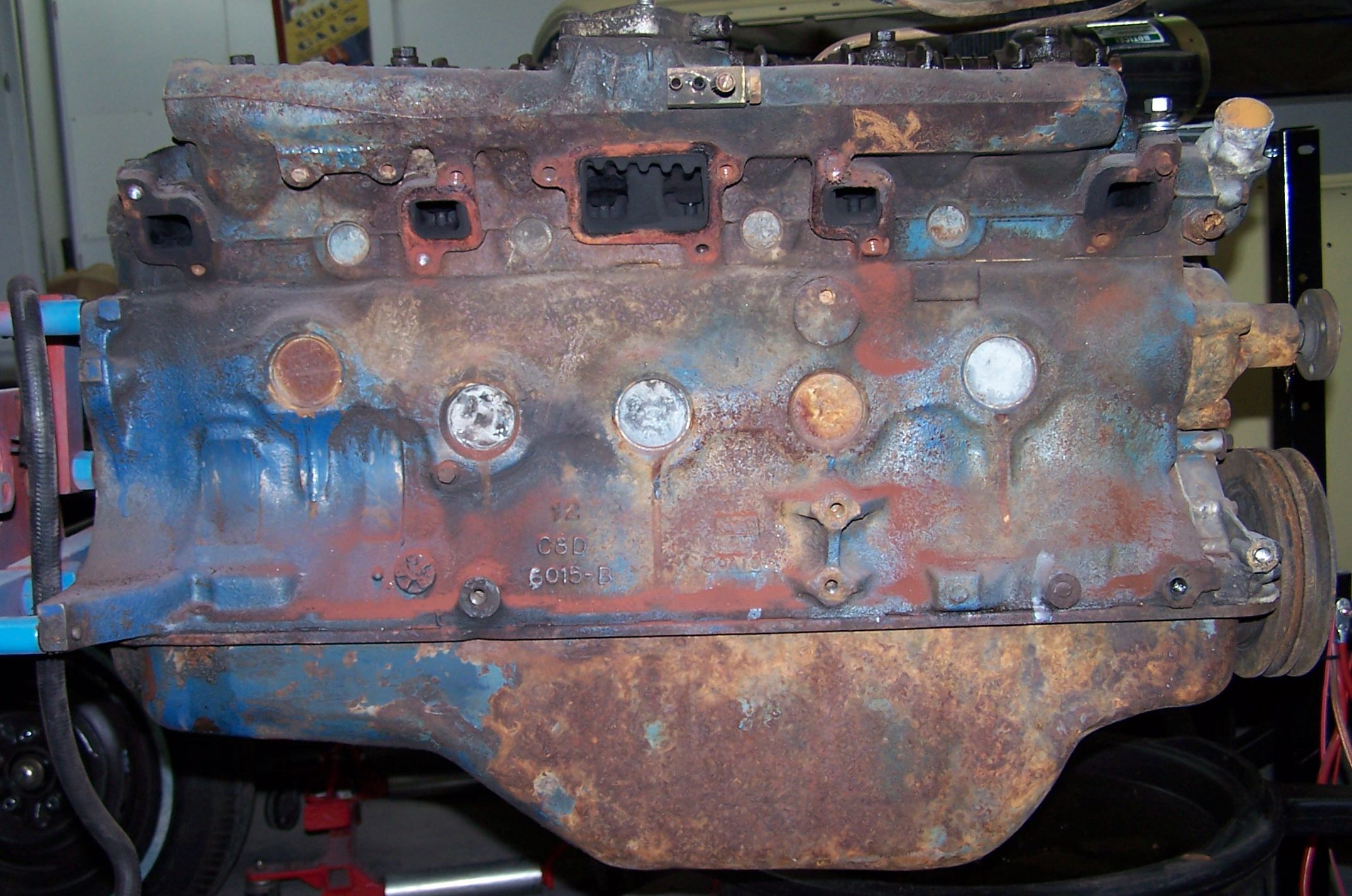
The exhaust manifolds were removed to check for cracks, which are common in these old log style manifolds. The five freeze plugs are obvious here. With the two groove pulley and altenator boss, this donor came out of a car with either air conditioning or power steering.
|
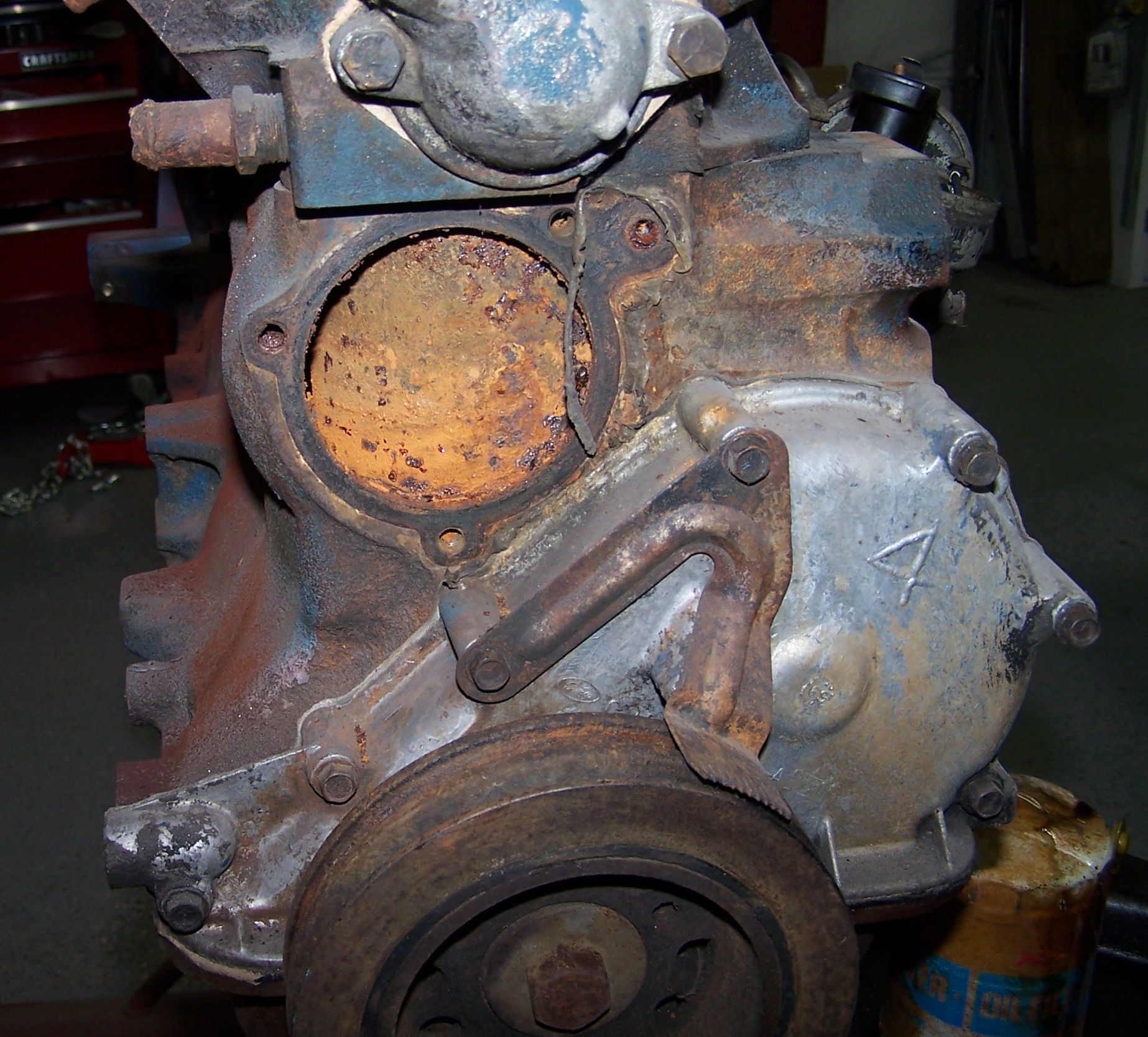
There is a lot of rust and buildup in the water passages in this old 200ci.
|
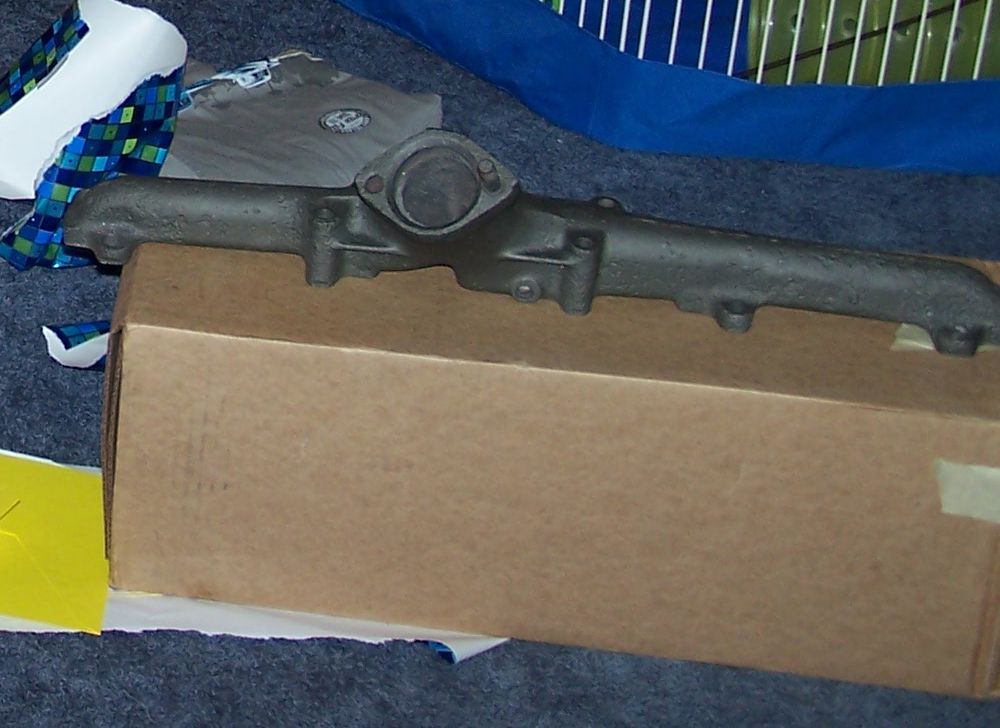
The new log manifold, another birthday present.
|

Time to remove the original engine. By this point, the rest of the car has been disassembled, the floor pans replaced and it is almost time to go onto the rotisserie.
|
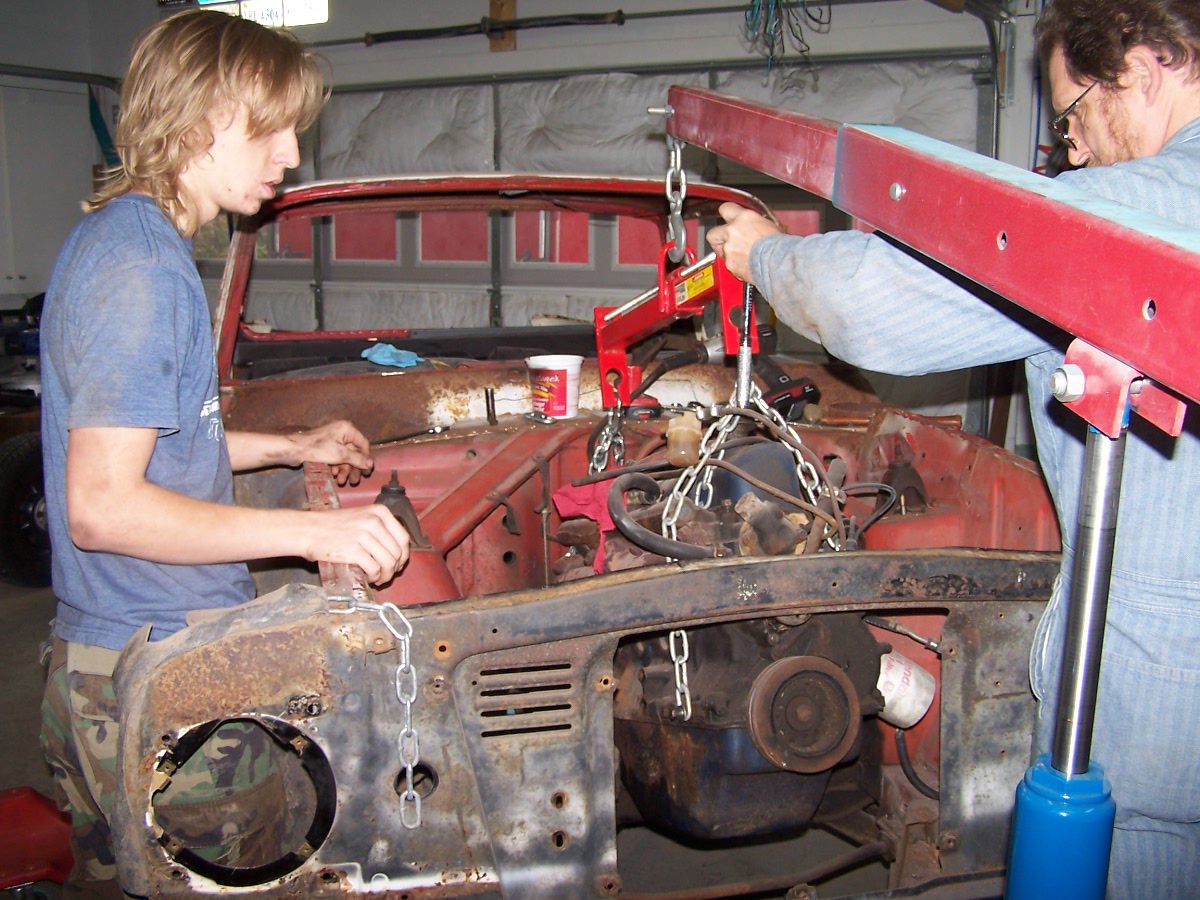
The engine leveller was used for this removal, since the radiator core support is part of the front end structural sheet metal. This will give us the most flexibility for the removal.
|
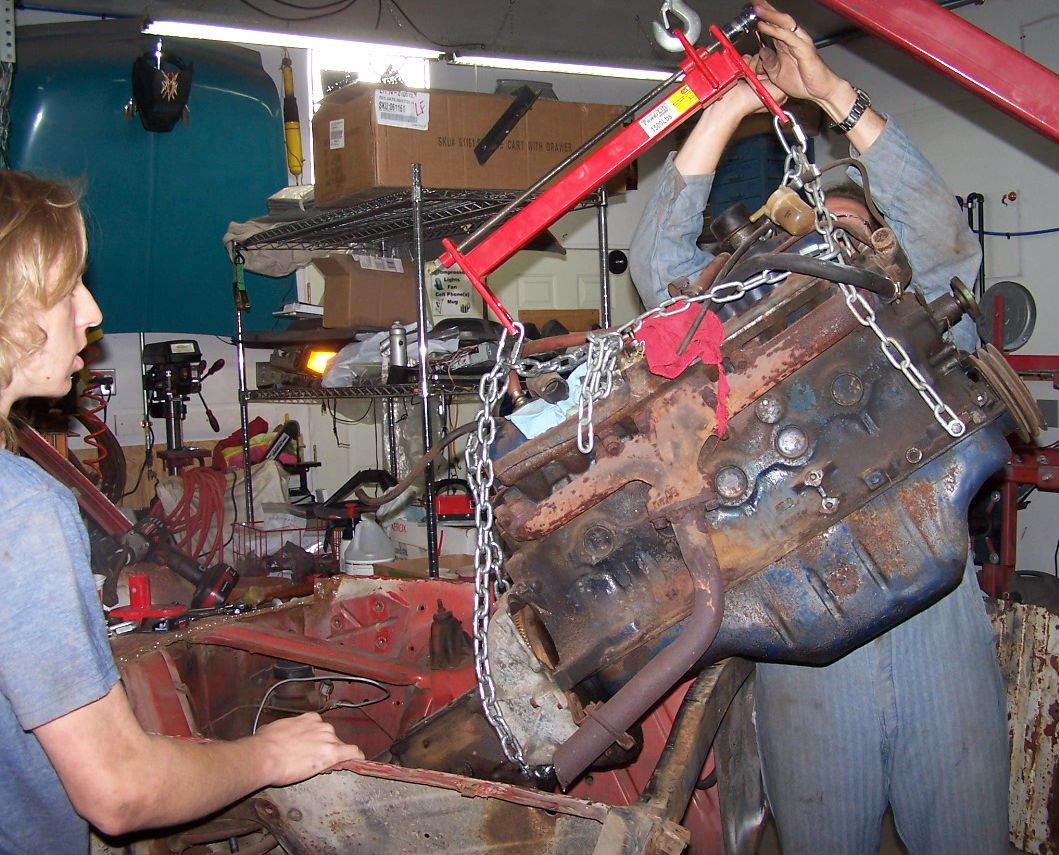
That leveller turned out to be critical. The engine with the transmission attached is very long. We had to stand it almost vertical to get enough room to clear the tailstock on the trans at the firewall. It will not be going back in this way.
|
Ok, so now to provide a bit of context and backstory. During freshman and sophomore years in high school, our son was thinking about following an engineering and car design path. But after two years in the Autocad program, he decided that a desk job was not for him. Instead, he wanted to return to the garage and work on cars. Our high school offered a three year program in Automotive Maintenance. Junior year, he took the sophomore entry level class. Senior year, he took the junior and senior classes simultaneously, a truly daunting task considering the shop teacher had a "harsh teacher" reputation and it required special permission from the teacher. Needless to say, he received that permission.
In additional to the normal local and state competitions, the teacher had signed up a team for the Hot Rodders of Tomorrow program. The goal was to have a five student team dismantle and rebuild a small block Chevy engine as fast as possible. There were rules that had to be followed for safety and some things like torque specs were not exact as the engine did not actually have to run. Considering these engines were dismantled several times a day, that is probably best. Dropping or bumping parts cost both time and points. The 32 of top 64 teams nationwide went to a competition at SEMA each year. The other 32 went to a competition at PRI.
Of course our son was on the team with 3 other male students and 1 female student and it probably is obvious that they went to SEMA in 2015. All but one of the team had graduated and went on to a trade school, with the one remaining being only a sophomore at the time the team was formed. The difference between first and second place that year was 2 minutes. The difference between second and eighth place was only 30 seconds. I'm proud to say our team finished eighth out of 32 at SEMA. The first place team had been practicing for four years and most of the other teams only 1 or 2 years. And our team less than 1 year.
Our son choose to go to Ohio Technical College in Cleveland, OH where he took - you guessed it - their Automotive Restoration program. He now works professionally restoring old cars. I hate to admit it, but I do envy him of some of the cars he has now driven at work.
While at OTC, during the Engine Building class, he asked if he could rebuild his engine. By then he had been through several classes and had a good raport with the instructors, so the engine building instructor agreed on one condition for top grade - the engine had to actually start and run when he was done. Deal. So the Ranchero's 200ci was packed up and taken to OH, once the basic machine work had been done locally. He started with an empty, clean, honed block and a pile of parts.
And now, the rest of the story . . .
|


